Installer Kaleta App
Accès rapide & mode hors-ligne


Fournir une électricité fiable et durable en République Démocratique du Congo.
La Société Nationale d’Électricité (SNEL) est l’entreprise publique responsable de la production, du transport, et de la distribution de l’électricité en République Démocratique du Congo. Fondée en 1970, elle joue un rôle crucial dans le développement économique et social du pays en fournissant une énergie essentielle aux ménages, aux industries et aux infrastructures. SNEL s’efforce de moderniser ses infrastructures et d’améliorer l’accès à l’électricité pour répondre aux besoins croissants de la population congolaise.
En dépit des défis liés à l’infrastructure et à la gestion, SNEL s’engage à améliorer la qualité et la fiabilité de ses services. L’entreprise met en œuvre des projets visant à augmenter la capacité de production et à étendre le réseau électrique national. Avec une attention particulière portée sur les énergies renouvelables, SNEL cherche à diversifier ses sources d’énergie pour assurer un approvisionnement durable et réduire son empreinte carbone.
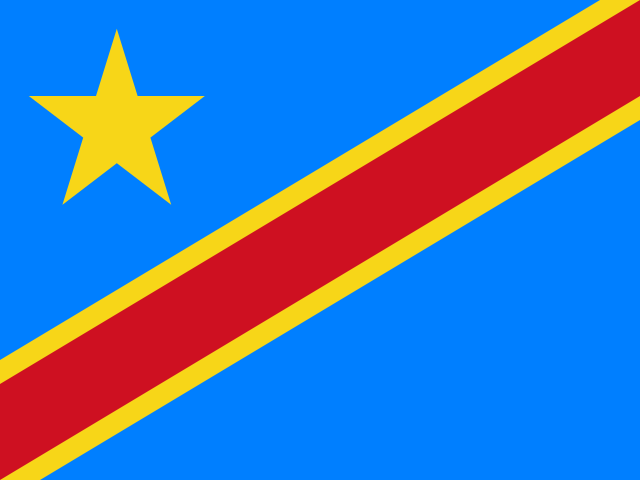
République Démocratique du Congo
SNEL travaille sur plusieurs projets d’expansion et de modernisation, y compris l’amélioration des centrales hydroélectriques et l’extension du réseau électrique pour desservir les zones rurales.
SNEL a réussi à augmenter la capacité de production électrique et à réduire les coupures de courant, contribuant ainsi à la stabilité économique et au développement social en RDC.