Installer Kaleta App
Accès rapide & mode hors-ligne


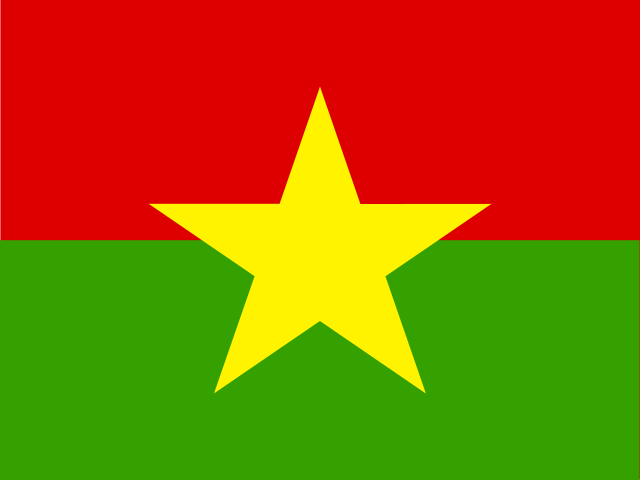
Promoting food security and combating the effects of drought and desertification.
Le Comité Permanent Inter-États de Lutte contre la Sécheresse dans le Sahel (CILSS) est une organisation régionale créée en 1973 pour répondre aux défis de la sécheresse et de la désertification dans le Sahel. Basée à Ouagadougou, Burkina Faso, elle vise à améliorer la sécurité alimentaire et à promouvoir une gestion durable des ressources naturelles. Le CILSS joue un rôle crucial dans la coordination des efforts régionaux pour atténuer les impacts du changement climatique et renforcer la résilience des communautés sahéliennes.
Depuis sa création, le CILSS a développé une expertise reconnue dans la gestion des ressources en eau, l’agriculture durable et la sécurité alimentaire. L’organisation travaille en étroite collaboration avec les gouvernements, les ONG et les partenaires internationaux pour mettre en œuvre des programmes innovants et adaptés aux besoins locaux. Grâce à ses initiatives, le CILSS contribue à la stabilité socio-économique et à l’amélioration des conditions de vie dans la région du Sahel.
Burkina Faso, Mali, Niger, Senegal, Chad, and other Sahelian countries.
Le CILSS met en œuvre des programmes axés sur la gestion intégrée des ressources en eau, l’amélioration de la sécurité alimentaire et l’adaptation au changement climatique. L’organisation offre également des opportunités de formation et de renforcement des capacités pour les acteurs locaux et régionaux.
Le CILSS a joué un rôle déterminant dans l’amélioration de la résilience des communautés sahéliennes face aux défis climatiques. Ses initiatives ont conduit à des avancées significatives en matière de sécurité alimentaire et de gestion durable des ressources naturelles, contribuant ainsi à la stabilité et au développement économique de la région.